
Quick answer
In Húsavík, boats approach whales under a voluntary code of conduct that asks captains to keep a respectful gap and let the animals set the terms. Vessels slow well before reaching a whale, avoid crowding, and never cut across its path. Exact spacing shifts with the species, the sea state, and whether calves are present.
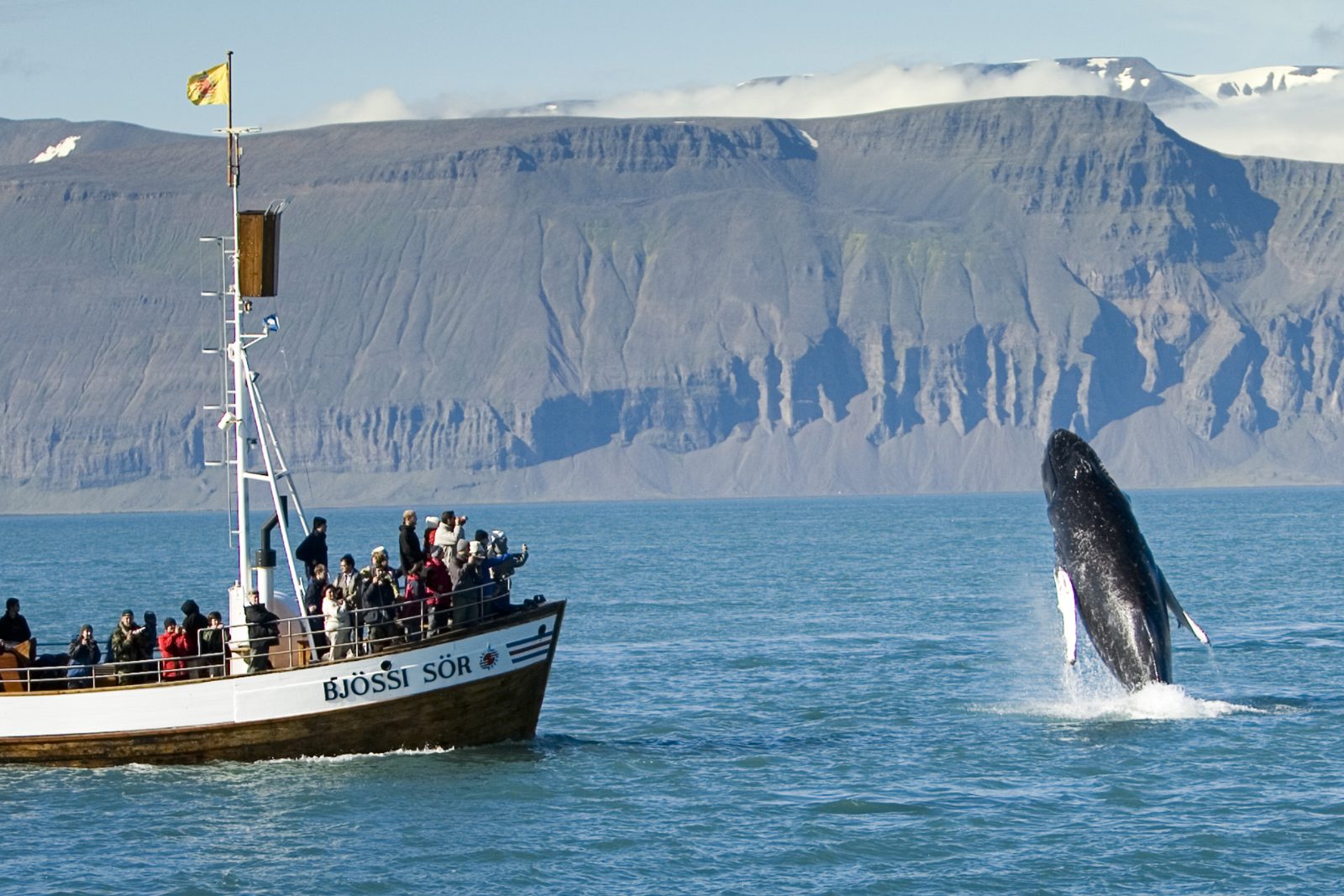
The whales of Skjálfandi Bay often close the gap themselves. A curious humpback will sometimes surface beside an idling boat, turning the question of whale watching distance into something the animal decides as much as the crew. That reversal sits at the heart of how viewing works off Húsavík's harbour at Hafnarstétt, the trip known locally as hvalaskoðun. The bay draws humpback whales, minke whales, and, in good years, blue whales, because deep glacial water funnels feed toward the surface. Boats leave from the same waterfront through the long daylight of an Arctic summer, when departures cluster across the daytime hours. Captains read the water rather than a stopwatch, easing off the throttle when a blow appears and letting momentum carry the hull. Sightings are common but never promised, and the bay can turn from glass to chop within an hour. The aim is to observe without steering the encounter, so a sighting feels earned rather than staged. For a visitor, this means the day is less about a guaranteed front-row seat and more about patience. Húsavík whale watching runs on restraint: engines idle, voices drop, and the boat holds position while the whale works its own line. Knowing the rhythm of the trip before boarding helps set expectations, since a distant fluke through binoculars is a normal outcome, not a failed one. The harbour itself sits on Hafnarstétt in the centre of town, free to walk onto, with the busiest sailings falling between about 08:00 and 17:00 when daylight and departures overlap. Arriving inside that window gives the widest choice of boats and the calmest reading of the bay. Puffins wheeling off the cliffs and eider rafts near the shore fill the quieter stretches. The etiquette that shapes these trips grew out of decades of shared practice among Icelandic operators, refined as the fleet expanded. Rather than memorising rules, most travellers simply trust the crew and watch how the boat behaves. Seen this way, the logic behind Húsavík's whale watching distance is plain: the closer the encounter, the more it belongs to the whale. None of it is about setting a personal record for proximity; a well-run trip measures success by the calm of the animal, not the length of the lens.
“The closer the encounter, the more it belongs to the whale.”
Official Rules for Whale Watching Distance in Húsavík
Under the IceWhale Code of Conduct, distance rules keep whales calm and encounters safe. Following them protects the animals and preserves sightings for everyone aboard.
Do
- Expect crews to hold outside the 300-meter approach limit when whales surface
- Respect the 50-meter caution zone as the closest permitted position
- Let whales set the pace and approach the boat if curious
- Stay seated and quiet when the engine idles near animals
- Ask your guide about the current distance being maintained
Don't
- Don't pressure crews to cross the 50-meter caution zone limit
- Don't expect boats to chase or circle surfacing whales
- Don't lean or reach beyond the rail toward the water
- Don't shout or make sudden movements that startle nearby whales
- Don't assume closer is better; the limits exist for their welfare
How Captains Manage Whale Watching Distance Step-by-Step
Approaching a whale is a graded sequence, not a straight run. Watch how the captain moves the boat through three distance zones over several minutes before you reach a viewing position.
Scan from the Searching Zone
The captain holds beyond 3,000m and reads the water for blows, fins, or feeding birds. The common error is expecting an instant sighting; locating an animal at this range takes patience and steady scanning.
Plot a slow line in
Once a whale is spotted, the boat closes the gap gradually and keeps engine noise low. People often assume a direct dash is fine, but a sudden approach can push the animal down before anyone sees it.
Ease into the Approaching Zone
Around 300m the captain slows further and reads the whale's behaviour and heading. The mistake here is willing the boat closer; the animal's comfort, not the passengers' cameras, sets the pace.
Hold at the Caution Zone
Near 50m the boat idles or drifts rather than pressing in. Passengers often expect the captain to keep advancing, but this is where forward motion stops and the whale is left room to choose.
Let the whale set the distance
If the animal moves toward the boat, the captain stays neutral and does not chase. The common slip is reaching over the rail or shifting weight suddenly, which can end the encounter early.
Back off on the same graded path
When the viewing ends, the boat withdraws slowly through the zones it entered. Cutting away sharply is the frequent error; a measured exit protects both the whale and the next group's sighting.
When Weather and Calves Modify the Allowed Boat Proximity
For the most consistent opportunities to observe whales within the standard proximity limits, visit between 08:00 and 17:00 during the peak summer months.
June to August
Peak visitor numbers at harborMild and calm, average 7°C to 11°C
Calmer summer seas allow captains to safely maintain the standard 50-meter caution zone. However, the presence of newborn calves or active feeding behaviors requires operators to increase this buffer distance to prevent disruption.
May and September
Moderate passenger volumeCool, winds picking up, 3°C to 8°C
Frequent choppy waters and gusty winds reduce boat maneuverability. To ensure safety, captains regularly increase their approach distance well beyond the standard limit during these rough sea conditions.
Morning departures
Fewer vessels on the bay—
Early tours between 08:00 and 11:00 often encounter calmer waters before afternoon winds rise. Stable sea conditions minimize vessel drift, allowing for more controlled and predictable proximity to the feeding whales.
Verdict: The most reliable slot is a morning departure between 08:00 and 11:00 from June to August, when calm sea conditions minimize required buffer distances.
The History of Local Whale Watching Distance Regulations
Húsavík entered organised whale watching in 1995. That year North Sailing sent two restored oak schooners onto Skjálfandi Bay. Founder Árni Sigurbjarnarson had refitted former herring and cod vessels for a gentler trade. Skjálfandi's cold, plankton-rich waters had long drawn feeding whales close to shore. The town held no written rules for approaching cetaceans. Captains relied on seamanship and mutual courtesy. Interest grew quickly. The Húsavík Whale Museum opened in 1997 beside the harbour, and summer traffic on the bay rose each season. Humpback and minke whales attracted rival fleets from Húsavík and neighbouring ports. Without agreed limits, vessels risked crowding the animals near their feeding grounds. Operators saw that an unmanaged whale watching distance endangered the wildlife their living depended upon. The decisive step arrived in 2013. Icelandic operators founded IceWhale, the Icelandic Whale Watching Association, in that year. Working with the Icelandic Tourist Board and marine biologists, members drafted a shared Code of Conduct. Local researchers supplied observations on whale behaviour, and their guidance stressed reading each animal's cues and yielding when a whale showed unease. The document fixed voluntary standards for speed, approach, and time spent alongside each whale. Húsavík skippers helped write the wording rather than await imposed law. The code turned scattered habits into a collective pledge, later revised as monitoring improved. That pledge survives in daily practice. Boarding any of the Húsavík whale watching tours, passengers watch skippers ease their throttles as the bay opens. The agreed whale watching distance still governs each approach. Newer carbon-hulled RIBs now share the water, yet they follow the same 2013 pledge. Interpretive panels at the Whale Museum record the 1995 beginnings, and the oak schooners of North Sailing depart the same quay along Hafnarstétt.
North Sailing launches Húsavík's first whale-watching voyages using restored oak schooners on Skjálfandi Bay.
The Húsavík Whale Museum opens beside the harbour to document Skjálfandi's cetaceans.
Icelandic operators found IceWhale, the Icelandic Whale Watching Association.
IceWhale members adopt a voluntary Code of Conduct guiding how boats approach whales.
Húsavík fleets, including RIBs, still operate under the IceWhale code.
Common Misconceptions About IceWhale's Approach Limits
Misconceptions often arise regarding how closely vessels interact with marine wildlife in Skjálfandi Bay. Visitors sometimes expect interactive experiences, unaware that strict codes of conduct protect the animals' natural behaviors.
MythBoats force close-ups to guarantee close-range views of the whales.
FactLocal captains departing from Hafnarstétt, 640 Húsavík, Iceland follow guidelines that prevent forcing close encounters. Any close-up views occur solely when the whales voluntarily choose to approach a stationary vessel.
MythGuides throw food into the water to attract whales to the boat.
FactFeeding cetaceans is strictly forbidden under the local code of conduct. Using food as an enticement disrupts natural feeding habits and can harm the marine ecosystem.
MythVisitors are allowed to swim with or touch whales during the tour.
FactCode of conduct rules strictly prohibit swimming with, touching, or otherwise interacting physically with the cetaceans. These measures prevent habituation and protect the animals from stress or injury.
MythVessels chase down departing whales to keep them in view.
FactCaptains do not pursue whales that are actively moving away or showing signs of distress. Instead, vessels maintain a parallel, oblique course or change direction to allow the animals a clear escape route.
MythAny boat can approach a whale at any time without coordination.
FactVessels coordinate via radio to prevent overcrowding around a single animal. Operators departing from Hafnarstétt, 640 Húsavík, Iceland limit the number of boats in the approaching zone to ensure the whales are not boxed in.
Check availability
Frequently asked questions about whale watching distance
Everything you need to know about whale watching distance