
Quick answer
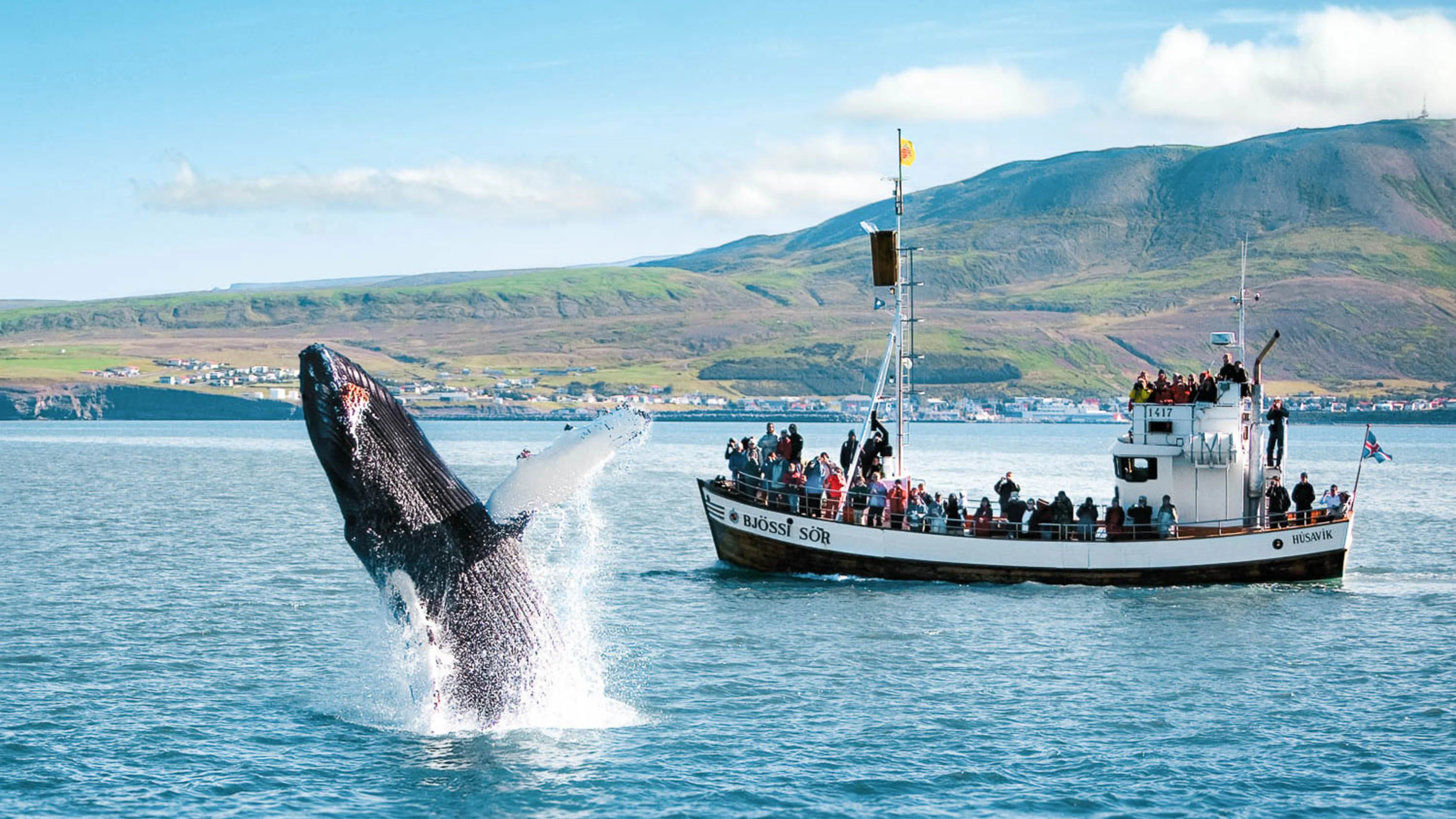
Whales linger near boats mainly because the vessel is drifting over a feeding ground, not because it interests them. In Skjálfandi Bay, humpbacks and minke whales follow krill and fish, so on a Húsavík whale watching tour a slow craft above a rich patch may share their company for an hour or more. Calm morning departures, roughly 08:00 to 11:00, offer the steadiest odds.
A humpback can hold its breath for forty minutes, yet in Skjálfandi Bay some individuals surface again and again within metres of an idling hull. Visitors leaving the harbour at Hafnarstétt often report the same scene: a single animal that lingers, circles, and returns long after the engines fall quiet. The pattern is common enough that the question why do whales swim near whale watching boats for hours has become one of the first things newcomers ask the crew. The answer sits at the intersection of geography and appetite. Skjálfandi Bay is a shallow, nutrient-rich basin fed by cold currents, and the same waters that draw a Húsavík whale watching tour also concentrate the fish and plankton that feed baleen whales. A vessel is rarely the attraction itself. More often the boat happens to drift above a feeding patch, and the whale stays because the food stays. Where krill gathers, a minke or humpback will work the column for as long as the density holds, indifferent to the small craft overhead. Curiosity plays its part too, though the crew tend to describe it modestly. Young animals in particular will roll, spy-hop, and pass beneath a hull as if inspecting it. This is behaviour to observe, not to provoke, and the wider biology of that curiosity belongs to a longer discussion. What matters for a visitor planning a trip is that these encounters are unpredictable in timing but reliable in setting. That setting is what makes the difference. Calm mornings, clear water, and an experienced skipper reading the surface all raise the odds of the long, close encounter that people remember. The harbour at Hafnarstétt is free to walk, open around the clock, and a natural place to watch the fleet return before booking a seat. Understood this way, why do whales swim near whale watching boats for hours stops being a puzzle and becomes a matter of habitat. The cetaceans of Skjálfandi Bay are not performing. They are feeding, resting, and occasionally curious, and a slow boat drifting over rich water is simply well placed to witness it. That is the honest version of the story, and the one worth carrying aboard a RIB boat whale watching trip out of Húsavík.
“The boat is rarely the attraction; the whale stays because the food stays.”
Misconceptions: Why Do Whales Swim Near Whale Watching Boats for Hours?
Several misconceptions persist about why cetaceans spend time around vessels in Skjálfandi Bay, often leading visitors to project human motivations onto wild marine mammals.
MythTour operators feed the whales to encourage them to swim close to the boats.
FactFeeding wild marine mammals is strictly prohibited. Operators based at Hafnarstétt, 640 Húsavík, do not use food lures; instead, the animals approach out of natural curiosity or social interest.
MythWhales swim near vessels to perform tricks and seek direct interaction with humans.
FactBehavior like spyhopping or tail-slapping serves natural functions, such as sensory exploration or communication. The animals are investigating the physical presence of the boat, not performing for passengers.
MythAn extended encounter means the whale is distressed or unable to swim away safely.
FactWhales are highly mobile and can easily dive deep or swim away to avoid vessels. If they remain near a drifting boat, it is a voluntary choice driven by curiosity.
The Science of Curiosity: Why Do Whales Swim Near Whale Watching Boats for Hours?
Whales display a high level of curiosity toward vessels in Skjálfandi Bay, often spending hours interacting with boat operators and passengers. This behavior is driven by specialized sensory biology and social interest.
30 to 60 head tubercles
Humpback whales have knobby bumps on their heads called tubercles, each containing a single stiff hair follicle. These structures act like mammalian whiskers to detect vibrations and water movements near vessels.
10,000 nerve fibers
A study in 1974 estimated that up to 10,000 nerve fibers innervate the sensory tubercles on a humpback's snout. This highly developed nervous system allows them to sense pressure changes as they approach stationary boats.
Two optical environments
Whales possess eyes adapted to focus in both water and air, allowing them to clearly see passengers. During a vertical spy-hop, they lift their eyes above the surface to visually inspect nearby objects.
15-minute close encounters
Minke whales in Skjálfandi Bay frequently exhibit curious behaviors, swimming alongside boats and rolling to look up at passengers. Naturalists in Húsavík have documented individual minkes staying within meters of stationary vessels.
18-meter humpback whales
Humpbacks can grow up to 18 meters long and possess highly sensitive skin. This high level of innervation makes them seek tactile stimulation, which they find by interacting with floating objects or boat wakes.
0 ISK entrance fee
It costs 0 ISK to visit the harbor area at Hafnarstétt, 640 Húsavík. While viewing the harbor is free, taking a whale watching tour requires a paid ticket.
08:00 to 11:00 arrival window
The best arrival window to catch calm waters in Skjálfandi Bay is 08:00–11:00. These morning conditions increase the chances of seeing whales approach stationary tour vessels.
North Sailing at Hafnarstétt
Operating from Hafnarstétt in Húsavík, this tour operator can be contacted at +354 464 7272. Their vessels depart from the harbor daily, taking passengers to the calm waters where whales often interact with the boats.
RIB Speedboats vs. Oak Boats: Why Do Whales Swim Near Whale Watching Boats for Hours?
When deciding on a whale watching tour in Húsavík, the type of vessel you select dictates how whales perceive the boat's acoustic signature and physical presence. Understanding how marine mammals respond to different hull sizes and engine systems helps set expectations for your encounter.
| RIB Speedboats Fast and maneuverable outboard crafts |
Top pick Traditional Wooden Boats Quiet and stable historical vessels |
|
|---|---|---|
| Vessel Type | 12-meter rigid inflatable boat (RIB) with outboard engines. | 15 to 30-meter traditional wooden vessel with inboard propulsion. |
| Engine Noise | 95 decibels (dB) of high-frequency noise from dual outboard motors. | 75 decibels (dB) of low-frequency diesel rumble or 0 decibels (dB) on electric vessels. |
| Proximity to Water | 1 meter of clearance from the surface, offering direct water-level lines. | 3 to 4 meters of elevation from the deck, providing a high vantage point. |
| Maneuverability | 30-knot maximum speed with rapid direction changes within a 15-meter turning radius. | 10-knot maximum cruising speed requiring a 50-meter turning radius for directional changes. |
| Whale Response Style | Short-term interest, with whales approaching for 5 to 15 minutes before moving away. | Sustained curiosity, with whales swimming alongside the hull at 4 to 6 knots for 30 to 60 minutes. |
Verdict: Choose traditional oak boats for quiet, sustained encounters where whales swim alongside the vessel for up to 60 minutes, or select RIB speedboats if you prefer rapid, close-range positioning at water level.
Peak Seasons: Why Do Whales Swim Near Whale Watching Boats for Hours?
The prime window to observe curious whale behavior in Skjálfandi Bay is from June to August during morning departures. These months offer the highest density of marine life combined with favorable sea conditions that encourage whales to approach vessels.
June to August
High demand, fully booked toursMild, 8°C to 12°C, low wind
This period features long daylight hours and high concentrations of krill, attracting multiple humpback and minke whales. The calm seas facilitate sustained, close-range interactions between the whales and boats.
May and September
Moderate volume, fewer daily departuresCool, 3°C to 8°C, variable wind
While temperatures are lower, migratory paths still overlap with the bay. Reduced vessel traffic during these shoulder months can lead to quieter, more intimate encounters.
Morning departures (08:00–11:00)
Moderate to high morning demand—
Early trips benefit from the calmest waters of the day, reducing boat movement. Stable surface conditions make it easier to track and observe whales that choose to swim alongside the vessel.
Verdict: Book a morning departure between 08:00 and 11:00 from June through August for the calmest seas and most frequent close-range whale encounters.
Code of Conduct: Rules for When Whales Linger Near Vessels
When whales approach and linger near a vessel, the crew follows strict conduct rules that keep encounters safe for both animals and passengers. Understanding these boat distance regulations helps you know why the skipper acts as they do.
Do
- Let the skipper cut engine speed as whales draw near
- Expect the boat to hold its position and idle quietly
- Allow whales to set the distance and approach voluntarily
- Trust the crew to keep the regulated gap from the animals
- Stay seated and calm when whales swim alongside
- Follow crew instructions on movement when whales linger close
Don't
- Do not pressure the skipper to chase or pursue lingering whales
- Do not expect the boat to close the distance deliberately
- Do not lean or reach overboard toward passing whales
- Do not shout or bang the hull to attract attention
- Do not ask the crew to restart engines near resting whales
- Do not assume the vessel can follow whales that move off
Húsavík Whale Museum: Deepening Your Knowledge of Whale Behavior Around Boats
Pairing your tour with local land-based stops helps clarify the marine science behind what you observe on the water while allowing time to warm up. These harbor-side locations are easily reached on foot immediately after your boat returns to the pier.
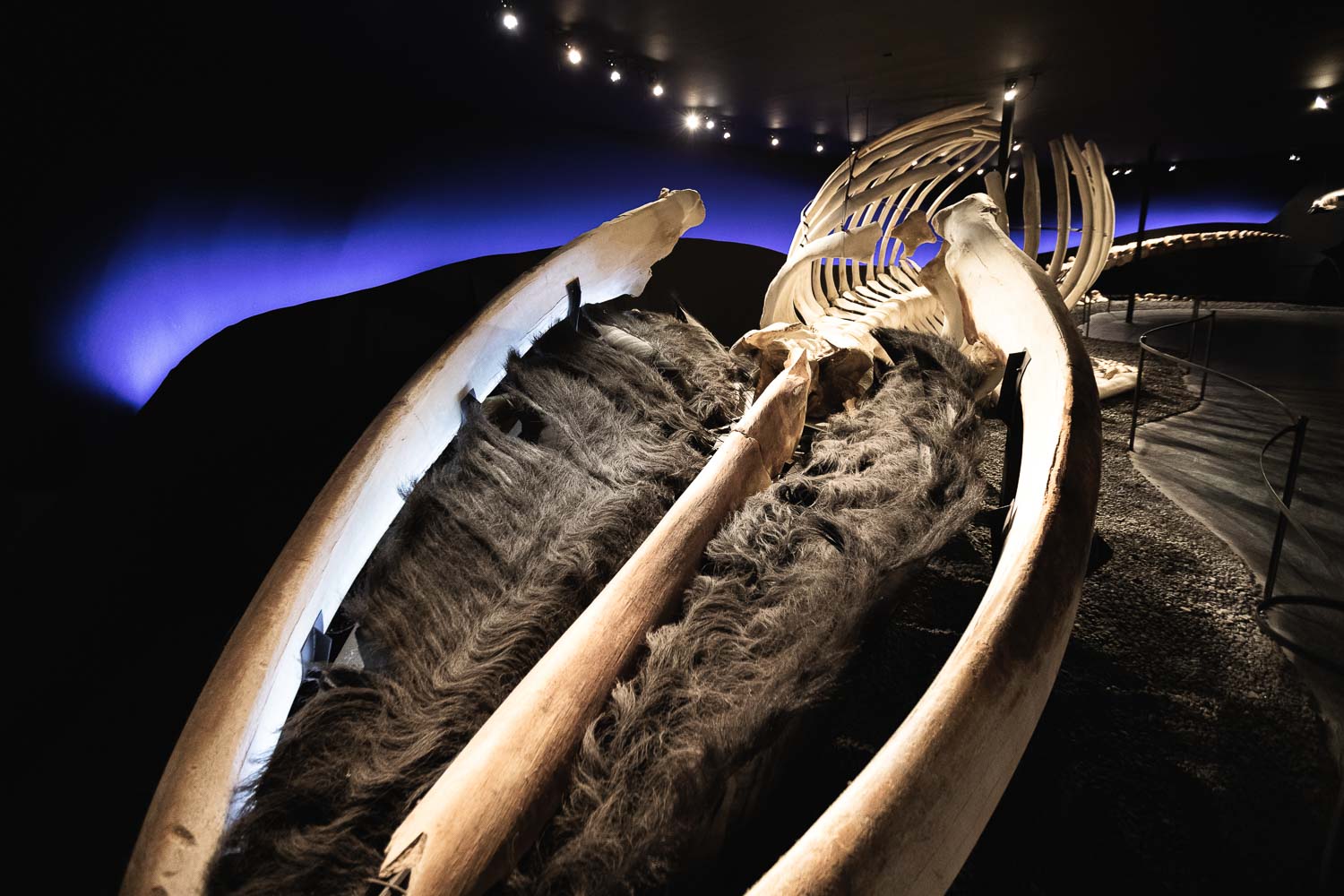
Húsavík Whale Museum
This harbor-side research facility houses eleven real whale skeletons, including a massive blue whale and humpbacks. Exploring the educational exhibits provides crucial scientific context about cetacean intelligence, communication, and their natural curiosity toward boats.
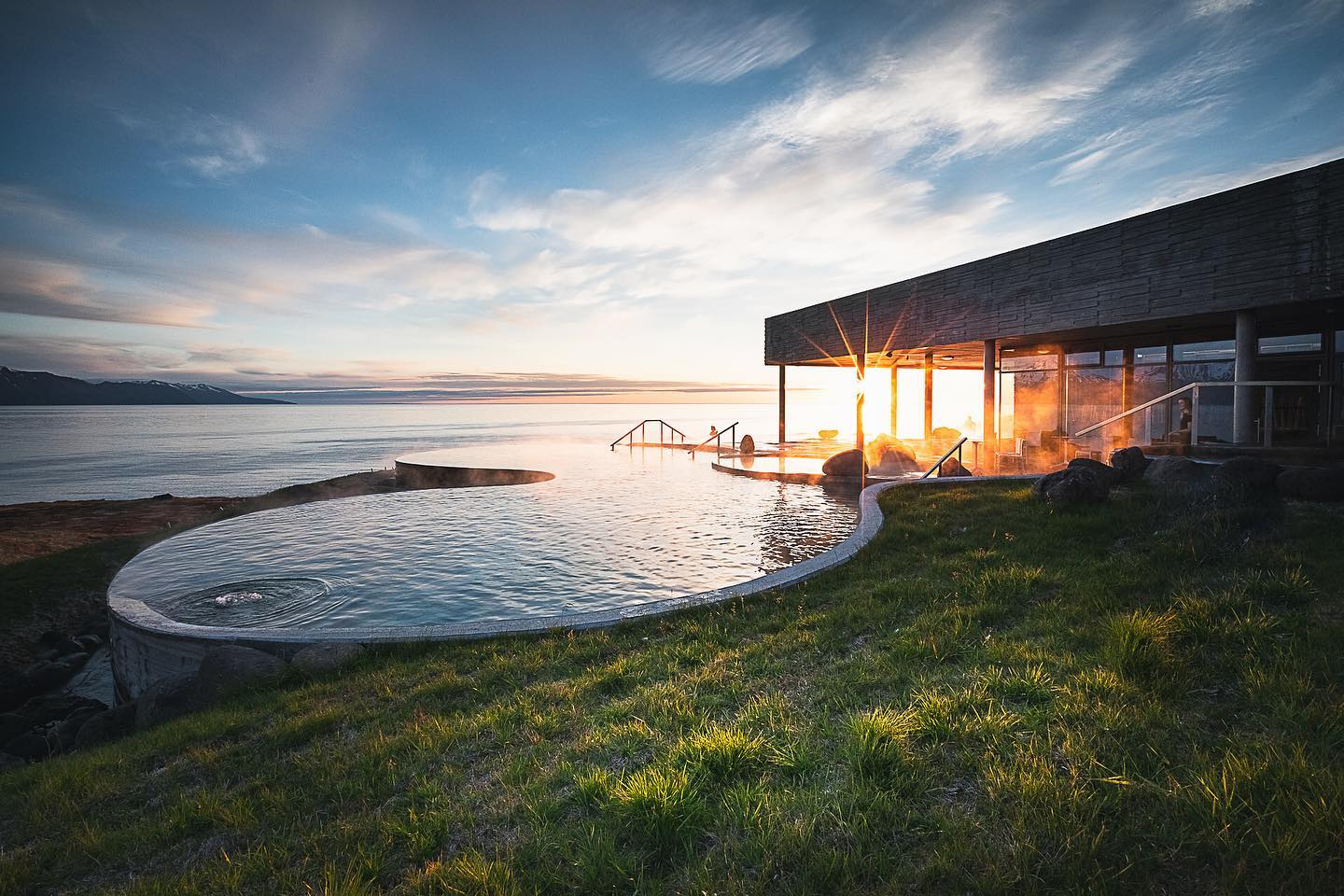
GeoSea Geothermal Sea Baths
Positioned on the Húsavíkurhöfði cliffs, this geothermal spa utilizes warm, mineral-rich seawater to help you recover after a chilly sea voyage. The outdoor infinity pools offer elevated views of Skjálfandi Bay, letting you spot distant whale blows while relaxing.

Húsavíkurkirkja
Consecrated in 1907, this prominent Swiss chalet-style wooden church stands as the primary architectural symbol of the town. Its quiet, welcoming interior and detailed historic exterior offer a peaceful stop directly on your route back into the town center for dining.
What to Pack: Preparing to Observe Whales Lingering Near Boats
Watching whales linger near the boat means long stretches of sitting still in open water, so pack for cold, damp, and motion before you leave.
-
Book your tour online in advance — Departures fill fast, and reserving early secures your preferred morning slot.
-
Start motion sickness meds the night before — Tablets and patches work best taken hours ahead of long, slow swells.
-
Pack a warm base and mid layer — Wool or fleece traps heat during long periods sitting still on deck.
-
Bring a waterproof outer shell — Spray and drizzle are common, and a windproof layer keeps the cold out.
-
Add a hat, gloves, and closed shoes — Extremities lose heat fastest while you wait quietly for whales to surface.
-
Aim for the 08:00–11:00 arrival window — Morning departures typically offer the calmest waters and best sighting conditions.
-
Charge your phone or camera fully — Extended encounters near the boat give long stretches to watch and record.
Check availability
FAQ: Why Whales Swim Near Boats
Everything you need to know about why do whales swim near whale watching boats for hours